By Zeno · October 8, 2026 · 3 min read
Easy or hard to cancel: the catalogue by category
Every service in the catalogue has a category and a cancellation rating. Put the two together and a pattern shows: some kinds of subscription are built to let you go, and some are built to keep you.
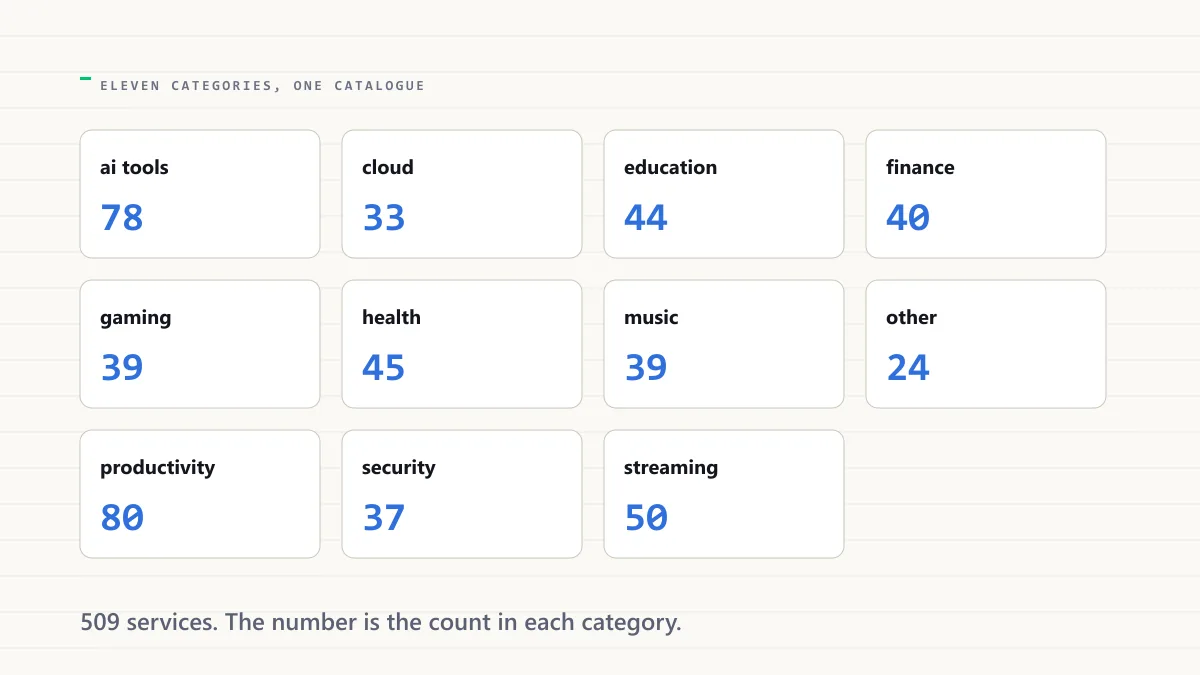
The categories are the ones the app uses to sort your own list: streaming, music, gaming, productivity, AI tools, cloud storage, security, health, finance, education, and other. The rating is the one the cancellation guides carry. Both are in the catalogue, so this comparison is counted, not estimated.
The picture
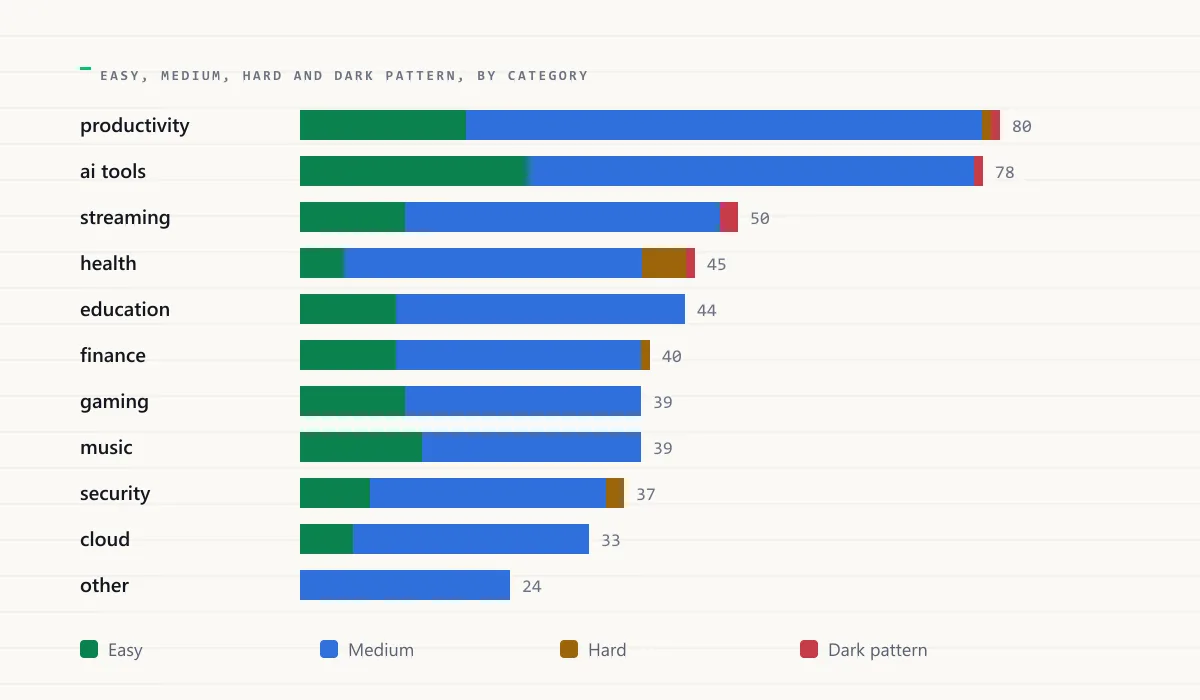
The same data as a list, largest category first. 'Hard' here means hard or dark pattern.
- productivity: 150 services, 33 easy, 4 hard
- entertainment: 128 services, 38 easy, 2 hard
- ai tools: 78 services, 26 easy, 1 hard
- health: 45 services, 5 easy, 6 hard
- education: 44 services, 11 easy, 0 hard
- finance: 40 services, 11 easy, 1 hard
- other: 24 services, 0 easy, 0 hard
What stands out
Health and fitness carries more hard ratings than its size would predict. Gym-style memberships, coaching programmes and devices with a subscription attached tend to want a conversation before they let you leave. If you are signing up for one, check the guide first and note what the exit costs.
Streaming and music are mostly medium: a few screens, one offer, done. The exceptions are the two streaming names in the dark-pattern group, which are also two of the most subscribed services there are.
Music, AI tools and gaming have the largest share of easy ratings: most are billed through a settings page with a visible cancel button, and the worst you meet is a downgrade offer. Cloud storage and security sit near the bottom of that share, though almost all of theirs are medium rather than hard.
Why categories differ
The difference is mostly about how the business is paid. A streaming or music service sells a monthly plan to millions of people and expects churn; its cancel flow is built to run without a human, so it is short, and the offer at the end is a cheap automated nudge. A gym, a coaching programme or a device-plus-plan company sells fewer, pricier memberships and has staff whose job includes keeping them; its cancel flow is built to reach a person, which is why it is long.
Software sits in between. Business tools billed annually often carry a commitment or a notice period in their terms, and the guides note it where it is known. Consumer apps billed monthly through a settings page are the easiest of all, because the same screen that sells the plan can end it.
How to use this
Before you subscribe to anything in a category with a high hard count, open its guide. The guide tells you where the cancel button is and what stands in front of it, and the difficulty is the first line. Two minutes before you sign up saves the twenty you would spend leaving.
Every guide in the catalogue carries the same rating on its first line, so the services that will fight you are marked before you sign up, not after.
And keep the categories in mind when you audit. The streaming and music lines on your list are the quick wins: ten minutes clears them, and the guides for those two categories rarely hold more than a single offer to decline. The health and fitness lines deserve a calendar entry, because the exit may need a call during office hours, and a renewal date that lands on a weekend, when nobody answers the phone, is how a cancellation slips a whole month.